What if reducing your environmental footprint could also boost your business performance? Around the world, businesses are looking for ways to reduce their environmental impact while still delivering high-performing products. One solution that’s gaining attention is reclaim rubber for automotive and industrial use. Not only is it cost-effective, but it also offers an eco-friendly alternative to traditional rubber, helping industries rethink manufacturing and product design.
In this blog, we’ll explore:
- How reclaim rubber is changing the automotive and industrial sectors
- The environmental and economic benefits of using reclaimed rubber
- Real-world examples of industries successfully adopting this sustainable solution
By the end, you’ll see why reclaim rubber is becoming a smart choice for businesses aiming to combine performance with responsibility.
Understanding Reclaimed Rubber in Manufacturing
Reclaim Rubber is all about giving a second life to used rubber. It starts with materials like old tyres, industrial scrap, and other rubber waste, which are carefully recycled through specialized processes. The result is a high-quality, reusable rubber that can be used across a wide range of automotive and industrial applications.
But reclaim rubber isn’t just practical; it’s also good for the planet. By choosing this eco-friendly rubber solution, businesses can:
- Reduce landfill waste and prevent rubber from piling up as waste
- Lower their overall carbon footprint, supporting greener operations
- Access a reliable alternative to traditional rubber without compromising on performance
For companies looking to embrace sustainable manufacturing, reclaim rubber offers a smart, responsible way to balance environmental care with industrial efficiency.
How reclaim rubber is changing the automotive and industrial sectors
The automotive sector is one of the largest consumers of rubber products, from tyres and seals to industrial belts and vibration dampers. As companies look for ways to cut costs and adopt more sustainable practices, natural reclaim rubber is rapidly emerging as a smart alternative to traditional virgin rubber.
- Cost Efficiency: Reclaimed rubber is significantly more affordable than virgin rubber, allowing manufacturers to reduce production expenses without sacrificing product quality. This makes it an attractive choice for companies aiming to optimize their budgets while maintaining high standards.
- High Durability: Modern processing techniques ensure that reclaim rubber meets the strict performance and safety standards required for automotive applications. Whether it’s used in tyres, gaskets, or belts, it delivers consistent strength and reliability.
- Versatility: One of the biggest advantages of reclaimed rubber is its adaptability. It can be used in a wide range of automotive components, including heavy-duty tyres, industrial belts, gaskets, and vibration dampers, making it a truly multi-purpose material.
- Sustainability: Incorporating reclaimed rubber into manufacturing helps reduce rubber waste, lowers the industry’s carbon footprint, and aligns with global initiatives for environmentally responsible production. Companies can demonstrate their commitment to sustainability while still meeting industrial demands.
By integrating reclaim rubber, automotive companies can enhance their product portfolio, reduce costs, and strengthen their environmental credentials, making it a solution that benefits both business and the planet.
The Environmental and Economic Benefits of Using Reclaimed Rubber
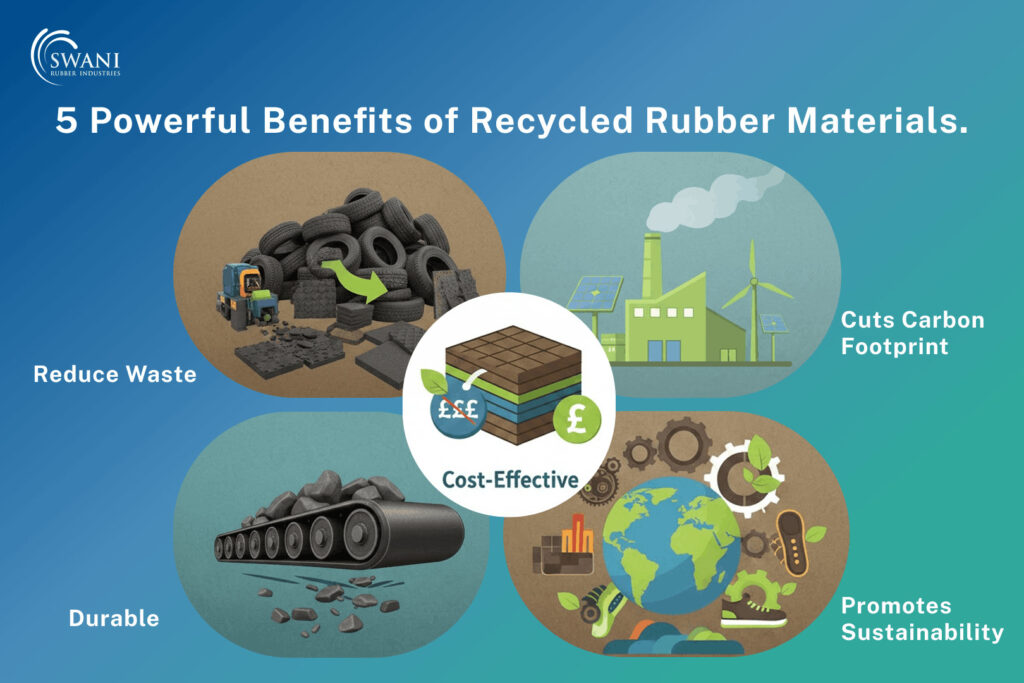
Reclaim rubber is not just good for business, but it’s also good for the planet. Giving old tyres and industrial rubber a new life, it helps reduce waste and keeps materials out of landfills. At the same time, it offers a cost-effective alternative to new rubber without compromising quality or durability.
- Reduces Waste: Turns old rubber into useful products instead of adding to landfills.
- Cuts Carbon Footprint: Supports more sustainable manufacturing practices.
- Cost-Effective: High-quality material at a lower cost than virgin rubber.
- Durable and Reliable: Perfect for heavy-duty applications.
- Promotes Sustainability: Encourages eco-friendly rubber solutions for the future.
Choosing reclaimed rubber is a simple way to combine smart business sense with environmental responsibility.
Real-World Examples of Industries Successfully Using Reclaimed Rubber
Sustainability is more than a trend; industries around the world are proving that eco-friendly choices like reclaim rubber make smart business sense. Reclaim rubber is a perfect example of this:
- Automotive Sector: Manufacturers turn old tyres into high-quality gaskets, seals, and even new tyres, saving costs while reducing waste.
- Construction Industry: Recycled rubber is used for flooring, mats, and insulation, creating durable products that are gentle on the environment.
- Heavy Machinery & Manufacturing: Conveyor belts, vibration dampers, and protective seals made from reclaimed rubber perform just as well as new materials.
- Sports & Leisure: Running tracks, playgrounds, and gym flooring use recycled rubber, offering safety, durability, and sustainability in one.
These real-world examples show that using eco-friendly rubber solutions isn’t just good for the planet, but it’s a practical, cost-effective choice for industries aiming to innovate responsibly.
Supporting the Global Rubber Recycling Market
As the push for sustainable manufacturing grows, the global rubber recycling market is expanding rapidly. Choosing reclaimed rubber allows businesses to access high-quality, reliable material while actively contributing to a circular economy. By reusing valuable resources, companies can reduce their dependence on virgin materials and take meaningful steps toward long-term environmental responsibility.
Conclusion
For companies in the automotive and industrial sectors, recycled rubber for automotive and industrial use is more than just a material choice. It’s a strategic move toward sustainability, cost efficiency, and innovation. By embracing eco-friendly rubber solutions, manufacturers can produce heavy-duty rubber products that meet performance demands while contributing to a cleaner, greener planet.